Monday, 15 May 2017

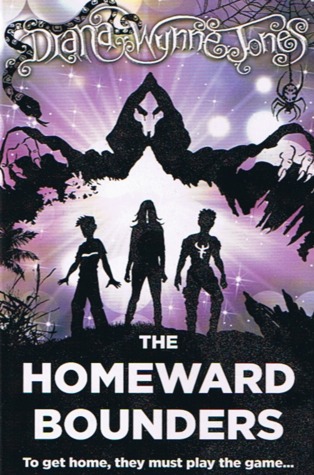
1981: The Homeward Bounders

Book Name: The Homeward Bounders

Author: Diana Wynne Jones

Genre: Children's, Fantasy

Year Published: 1981


   I decided to pick this book for 1981 mainly because it was by Diana Wynne Jones, who wrote Howl's Moving Castle, which to be fair, I haven't read, but I loved the anime adaptation of it. So, basically I was intrigued about her other stories, and I'm pleased to say I wasn't disappointed.
   The Homeward Bounders has an interesting premise, which is based on the idea of multiple parallel worlds, which one can travel between using the 'Bounds'. The main characters spend the novel in an attempt to return to their home worlds, hence them being called 'Homeward Bounders'. The concept that I found particularly compelling was that everything happening in these different worlds is controlled by 'Them', in a way that is strongly reminiscent of war gaming. I don't want to go into this too much as it may spoil the storyline, but just to say that as a roleplayer and someone who has at least tried War Games, I really loved this aspect of the novel.
   Despite a relatively complex idea and setting, I found the story flowed very well and it was easy to engage with the characters, although at times I did find them a little annoying. I enjoyed exploring the different worlds alongside them and wondering whether they would be able to get home. I do wonder whether I would have gelled with it so well without my experience of war gaming and roleplaying however. Perhaps if someone unfamiliar with these concepts does read it, perhaps they could provide me with their view?
   Overall, it was a well-written story with a great concept and I think I'll definitely have to read some more of Diana Wynne Jones' works. She was definitely a very talented author, if The Homeward Bounders is anything to go by.

Books I Read Inbetween: City of Lies - Alafair Burke

Saturday, 18 March 2017

1973: The Princess Bride

Book Name: The Princess Bride

Author: William Goldman

Genre: Fantasy

Year Published: 1973


   The Princess Bride has been one of my favourite films since I was about 11 or 12. So, er... quite a while. The book, potentially obviously, enjoys many of the same qualities of the film: humour, action, romance, sword fighting, revenge and magic all rolled into one. Even if you haven't watched it, you may recognise the famous lines, "My name is Inigo Montoya. You killed my father. Prepare to die!" It's a film that seems to be well known and well received by anyone who likes films, and so I believe this should also apply to the book. 
   The dialogue is fantastic; I even enjoyed the way the story is broken up William Goldman's discussions of how he chose to abridge the original book by S. Morgenstern. Now, hopefully this isn't really a spoiler, but I feel the need to point out that there is actually no original Morgenstern. The whole backstory is also fiction and is purely used as a framing device. If you've seen the film you'll know that it begins a grandfather reading "The Princess Bride" to his grandson. Occasionally the film is interrupted by discussions between those two, and in much the same way, the book is interrupted by William Goldman. Rather than being annoying though, I felt it added more to the book, and made it feel more alive and more interesting. 
   Coming back to the dialogue itself; I found it flowed really well, and really made the characters come alive. In particular, if you have watched the film, you might find yourself surprised by how closely the book matches it, right down to the speech. The lines in the film are exactly the same in almost all cases, and you may find yourself reading them in the actors' voices! This is largely due to the fact that William Goldman did the screenplay, meaning that the adaptation works much better than other books which have been made into films, with the most common issue being cuts to the storyline. 
   It's hard to say how much I would have enjoyed The Princess Bride if I hadn't been such a fan of the film. Usually I prefer to read a book before watching the film, but in many cases, it doesn't seem to make a difference to my enjoyment of it whichever way round I discover a story. The fact is that The Princess Bride is an excellent story, in both film and book form, and I think that although I might have found Goldman's interruptions strange and perhaps even annoying at first, that the actual story is interesting and compelling enough that I would have enjoyed reading it regardless. It also works well as a satire of a large number of genres, which means it covers most bases for all kinds of readers. I can imagine some people won't like the Morgenstern abridgement aside bit as much as I did, but please, give it a try anyway; maybe you can just skip over those bits if they're bothering you. 
   Now I realise I'm starting to ramble a bit, so please excuse me whilst I go back to pretending to be a swashbuckling pirate.


Other Books I Considered: Breakfast of Champions - Kurt Vonnegut
Books I Read Inbetween: How to Train Your Dragon - Cressida Cowell; Ubik - Philip K. Dick; The Fifth Elephant - Terry Pratchett

Monday, 24 October 2016

1951: The Day of the Triffids

Book Name: The Day of the Triffids

Author: John Wyndham

Genre: Science Fiction

Year Published: 1951


   So... Day of the Triffids. This is a book I've certainly heard of, but really had no idea about. I realise I've said that about a few of the books now, but I guess that's why I chose them. There's an awful lot of books out there which I keep thinking, "I really ought to have read that". It's one of the reasons I started this challenge. To force myself to read outside my comfort zone and discover why certain books are now classics and why people still enjoy them many years after they were written. Probably even when I finish this list, I'll still have hundreds more books to read, but at least I'm making a start!
   Now, before reading this book, I had a vague idea that the triffids were plants and I think I was probably expecting a story in which people were chased by giant plants for most of it. Without spoiling the plot too much, I'd like to say it's a lot more in depth than that. In fact the triffids really don't feature as much as I was expecting. As it turned out, it was more horror for me than sci-fi, with the main aspect of the book being the fact that the vast majority of people are blind. 
   Being blind is something that scares me a lot. It's like being scared of the dark, it's not specifically the dark you're scared of, but the fact you can't see properly. Whilst the book focuses on characters who have been spared from blindness, there is a consistent reminder throughout of how deeply this epidemic has affected the populace, as over time society quite literally crumbles. On top of that, the survivors have to deal with the threat of the triffids, who are now infesting the countryside with no-one to control their spreading.
   I love the way Wyndham created this post-apocalyptic world, and how his characters react differently to the chaos they've been thrown into. Their viewpoints on how to deal with having the society they've been brought up in being destroyed produce some very interesting conversations. I particularly liked the way it made me think about what I might do and how I might feel if a similar situation should occur. Would I want to save everyone? Or would I focus on rebuilding the world and saving only a few? I'm still not sure. Either way, I recommend reading it and maybe you can decide for yourselves. Just hope that if it does happen, there aren't any triffids.


Other Books I Considered: The Catcher in the Rye - J.D. Salinger
Books I Read Inbetween: The Rest of Us Just Live Here - Patrick Ness; A Dance with Dragons: Dreams and Dust - George R. R. Martin

Tuesday, 20 September 2016

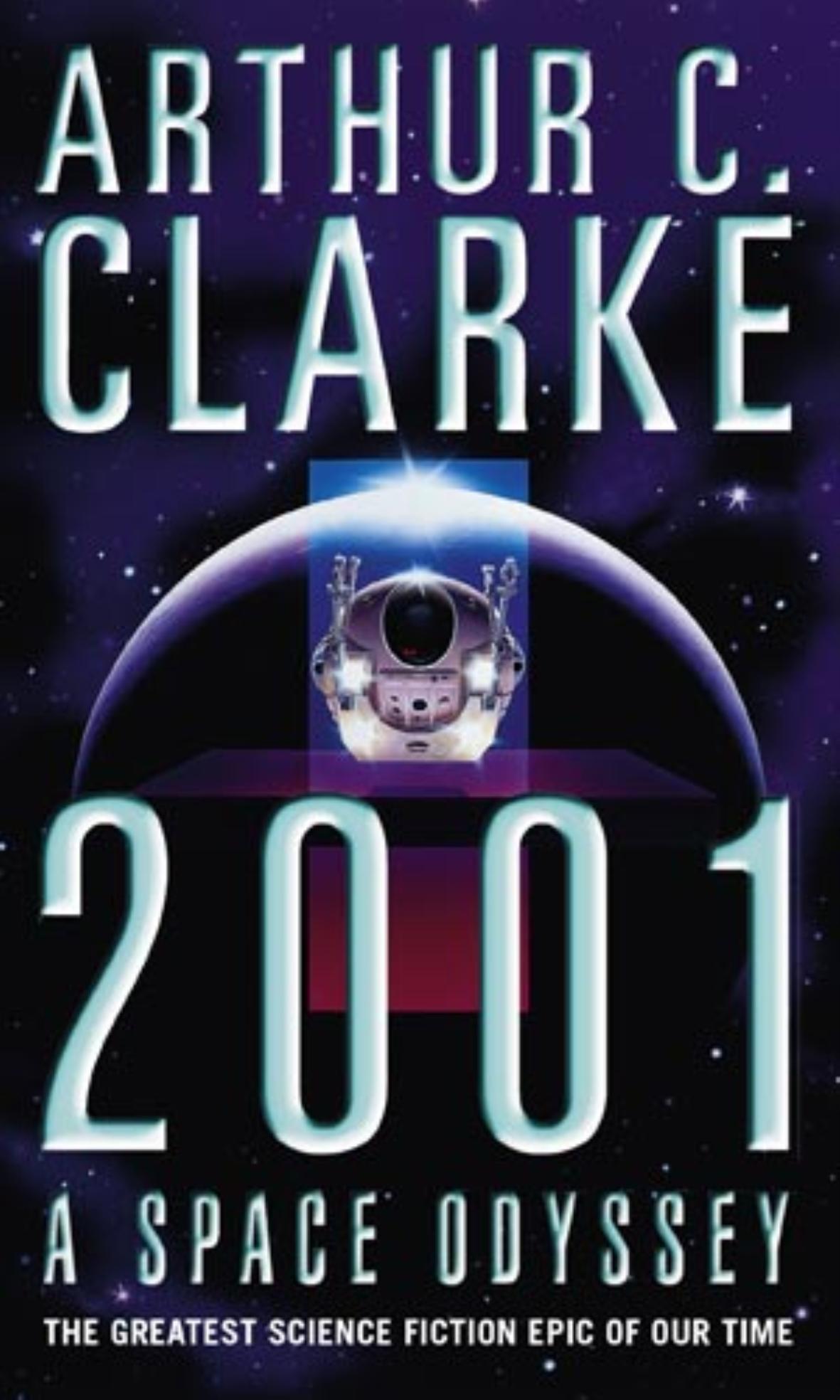
1968: 2001: A Space Odyssey

Book Name: 2001: A Space Odyssey

Author: Arthur C. Clarke

Genre: Science Fiction

Year Published: 1968


   Labelled on the cover as "the greatest science fiction epic of our time", 2001: A Space Odyssey certainly had a lot to live up to, and I'm pleased to say it didn't disappoint. Written in 1968 concurrently with the also popular film version, it contains elements which have really stood the test of time when it comes to our thoughts and ideas of what space travel will be like in the future. The brief synopsis is that having discovered signs of intelligent life which existed prior to ours, a mission is launched to investigate the further reaches of our galaxy.
   I had seen the film quite a long time ago but I had forgotten pretty much everything except a couple of images I won't discuss as they are very plot-centric. As such I was starting this book with only a vague notion of what it's about. Whilst the stories are fairly similar between the film and book version, there is one big difference, that being that in the book they travel as far as Saturn, whereas the film only takes us to Jupiter.
   The book is split into large sections which are then divided further into chapters, breaking up the novel nicely. I'll touch on the first section - The Dawn of Man - here, but I don't want to give away the whole plot. 2001: A Space Odyssey actually starts way back in time, when our ancestors first learnt to use basic tools. In Clarke's vision, apes were exposed to a monolith which helped them on their way to intelligent thinking. This idea alone should give you an idea of the level of sci-fi in this book. It's nothing ridiculously complex; in fact all the ideas put forward about future technology, such as high functioning A.I., tablet computers not unlike modern day iPads, and spaceships capable of reaching distant planets, are quite reasonable and believable.
   I think this is what makes the book so easy to read and interesting to absorb. Clearly a lot of research was put into it to help create the lifelike descriptions of the ship as well as space travel in general and it's clear to see. Overall, it is a very interesting what if science fiction novel, with a little action and a lot of thought-provoking material. Highly recommended.


Other Books I Considered: His Master's Voice - Stanislaw Lem; Do Androids Dream of Electric Sheep? - Philip K. Dick; Escape to Witch Mountain - Alexander H. Key
Books I Read Inbetween: The Art of Being Normal - Lisa Williamson

Friday, 5 August 2016

1961: Catch-22

Book Name: Catch-22

Author: Joseph Heller

Genre: War Fiction; Black Humour

Year Published: 1961


     Catch-22 is a book I've been meaning to read for a long time and just never got around to. Honestly, I didn't even know much of what it was about before I read it, but I'd heard lots of people recommend it and the fact the book title has even made its way into regular English speech was very interesting in itself. As it turns out, it's set in Italy during World War II and deals with a wide range of characters and their experiences whilst serving there.
     Catch-22 as we use it today is basically a dilemma which you can't escape from, because one situation conflicts with another. In the case of the novel's main character, Yossarian, he must be insane if he keeps flying combat missions, but if he requests to stop flying them, he is clearly sane and must keep flying. Thus a large part of the novel revolves around the initial theme of Yossarian trying to get out of the war.
    The way in which the story is written is excellent, particularly the way the chapters centre on different characters and weave back and forth through time, yet without causing undue confusion. Somehow Heller has made it flow perfectly, and it is very interesting to read about a situation from one person's viewpoint, and then to come across the same situation in a later chapter, but recalled by a different character. It is also peppered with dark humour, which I wasn't altogether expecting from a war novel, and which made it very enjoyable reading. 
    Of course, along with the humour, there are less pleasant sections of the book. It is set during World War II after all. Deaths abound, as well as societal issues such as poverty, prostitution and isolation. For every bit in the book that makes you feel like the characters are having a jolly old time, it is countered by a frank reminder of where they are and what is happening around them. It really is an excellent depiction of what the war was like for those involved, especially when you consider that Heller himself served in the war, flying 60 combat missions on the Italian front. 
    Overall, I would highly recommend this book and hope that my description has been fairly accurate - it was a very difficult book to describe! A few parts here and there at the beginning may need to be reread, as I didn't get how the book was laid out straight away and it was a little confusing initially. In the end though, the way it oscillates between humour and sadness, past and present is really what made the book for me. It is absolutely worth persevering though, it only gets better.


Other Books I Considered: The Phantom Tollbooth - Norton Juster; Solaris - Stanislaw Lem; Stranger in a Strange Land - Robert A. Heinlein
Books I Read Inbetween: Why Is This Night Different from All Other Nights? - Lemony Snicket

Saturday, 6 February 2016

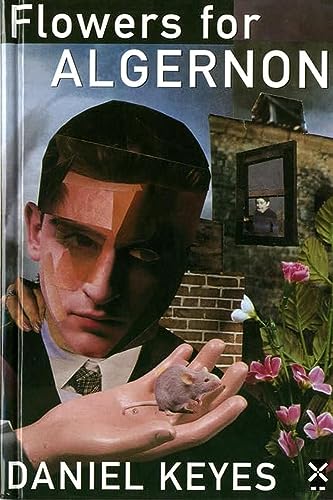
1966: Flowers for Algernon

Book Name: Flowers for Algernon

Author: Daniel Keyes

Genre: Science Fiction

Year Published: 1966


   Flowers for Algernon was originally published as a short story in 1959, but as the full novel was published in 1966, this is the year I am using for my blog. It's described as science fiction, but it's not what I would typically think of for sci-fi - nothing too futuristic or over the top, but rather very much based in real life with the possibility of a medical breakthrough. As such, it was fairly easy to read and to connect with the characters. As the novel is split up into diary entries and progress reports, it was also good for dipping in and out of. 
   The book itself concerns the story of Charlie Gordon, described in the book as a retard or moron, who wishes to become smart so he can be like other people and have lots of friends and enjoy talking with them. On the advice of his teacher, he takes part in an experiment designed to increase his IQ, which has been previously only been used on animals, such as the mouse, Algernon. The experiment is a success and after a short time Charlie becomes extremely intelligent, though his emotional abilities don't develop quite so quickly. I won't go into it much more than that, as I don't want to spoil the book. 
   It is interesting to watch Charlie change through his progress reports and diary entries. At the start of the book there are many spelling mistakes and a lack of grammar which may make the initial pages difficult to read, but following the experiment his writing slowly changes, as spelling improves, punctuation appears and new, difficult vocabulary is introduced. At some points towards the middle of the book it became a little hard to read without going back over the sentences a few times, as Charlie's intelligence rises significantly. Fortunately the story line continues to be compelling and interesting enough to keep you going back for more. 
   Flowers for Algernon was also an emotional read, due to its treatment of the mentally disabled, and particularly the way people view Charlie and Algernon. They are thought upon only as experiments, rather than living beings. Charlie, who so wanted to become intelligent so he could converse with his friends, finds that people were not always as kind as he believed, and as the book develops he has many insights into his past, changing his view of co-workers and his family, amongst others. He struggles to integrate into society and turns to drink and solitude as his IQ increases. 
   Overall, it was very engaging and the epistolary style in particular made it enjoyable to read. Whilst it was sad in places, it was also interesting and thought-provoking, making it well worth a read for anyone in my opinion. If you find yourself getting stuck towards the middle, be assured, it picks up again quickly. Apparently the novel has also been made into a film - Charly - though I've not seen this yet, and I also understand the book differs a little from the original short story. Whichever version you choose, I'm sure you'll come away feeling a little differently about the world.


Other Books I Considered: Mott the Hoople - Willard Manus; Valley of the Dolls - Jacqueline Susann
Books I Read Inbetween: The Blackhope Enigma - Teresa Flavin; Slaughterhouse-Five - Kurt Vonnegut

Saturday, 5 December 2015

1997: Audition

Book Name: Audition

Author: Ryu Murakami

Genre: Horror, Romance

Year Published: 1997


   Audition... This was a weird book. I mean, I figured it was going to be from the fact it's described as being both a romance and a horror novel. Those two don't generally go together. Written by Japanese author, Ryu Murakami, and also a film (which unfortunately I haven't seen yet), this was a pretty good read overall, though it had a lot of build up to a short climax. Maybe a fifth of the book has something that's really interesting happening, the rest is just filler/descriptions.
   The storyline is an interesting one. Aoyama is a single father, his wife having died some years ago, and his son suggests he get a new wife. This results in an audition being held on the pretence of finding an actress for a film, but with the real goal being for Aoyama to find a nice lady. Enter Yamasaki Asami. Aoyama quickly falls in love with her, though his friend thinks there's something a little odd about her and she doesn't seem to have any friends or family... Also there's a guy in a wheelchair who freaks out when he sees her. But who cares about that? She's clearly the most wonderful woman in the whole world. 
   You may get the gist that this is the romance part. If you don't like spoilers, at least know this. The bit at the end really is the horror part. It's very short-lived, but pretty bad. If you're squeamish or anything like that - don't read this book! It may seem like a lovely romantic novel. It isn't. You've been warned.
   That aside, I would say it's a shame really the horror part wasn't longer somehow. The romance part of the book is nice and all, but it's rather long in getting to the point, despite the writing being really smooth. The descriptions are well-written and it's easy to imagine yourself there in the moment, but after a while it just doesn't have a draw to keep reading. The good thing is, it's short. So if you have a few days spare, you can easily read and enjoy it. I do recommend reading it. But it's not one you're going to want to come back to again.


Other Books I Considered:The Bone Collector - Jeffery Deaver; Cold Mountain - Charles Frazier; In the Miso Soup - Ryu Murakami; Memoirs of a Geisha - Arthur Golden; A Song of Stone - Iain Banks; Tuesdays With Morrie - Mitch Albom
Books I Read Inbetween: The Moth Diaries - Rachel Klein